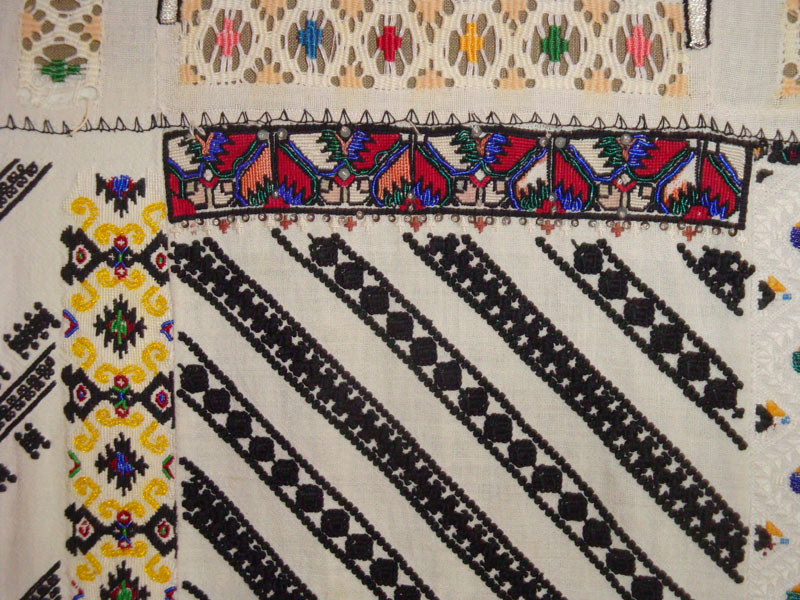
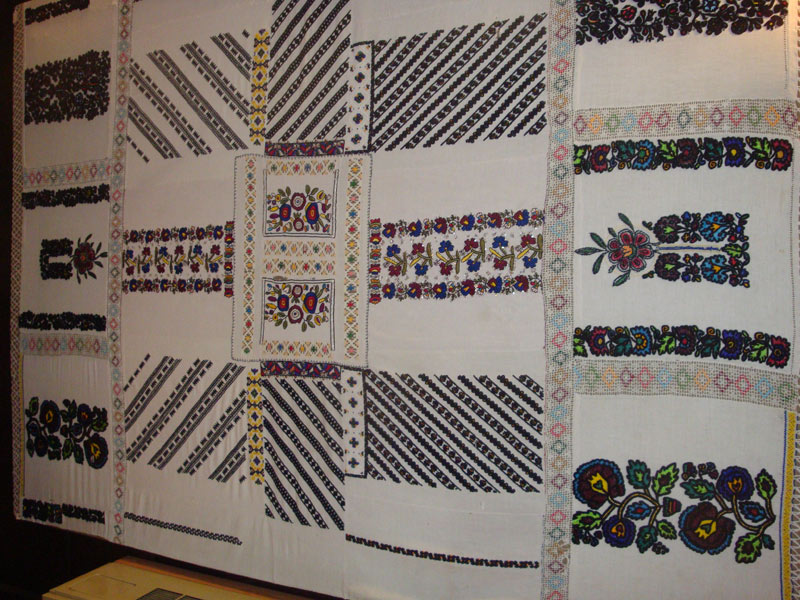
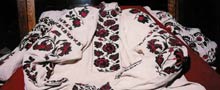
Gifts to the Museum in 2011:BED SPREAD This bed spread is made out of embroidered sleeves from women’s shirts from the Bukovyna region.
History of the artifact: Osypa (nee Maier) Hryhorovych was born ca.1850s and lived in the city of Chernivtsi, Bukovyna region. She was a talented artisan especially in needle arts like such as knitting, crocheting, and embroidering. She was most interested in women’s embroidered shirts. Used shirts from this region were often sold at markets and fairs by local peasant women. She purchased these shirts and used the embroidered portions, in various arrangements to create such items as tablecloths, bed spreads, drapes, handbags, and dresses, which she presented as gifts to her children and grandchildren. In 2010:From the Estate of Malyna Dziuba (1920-2009)
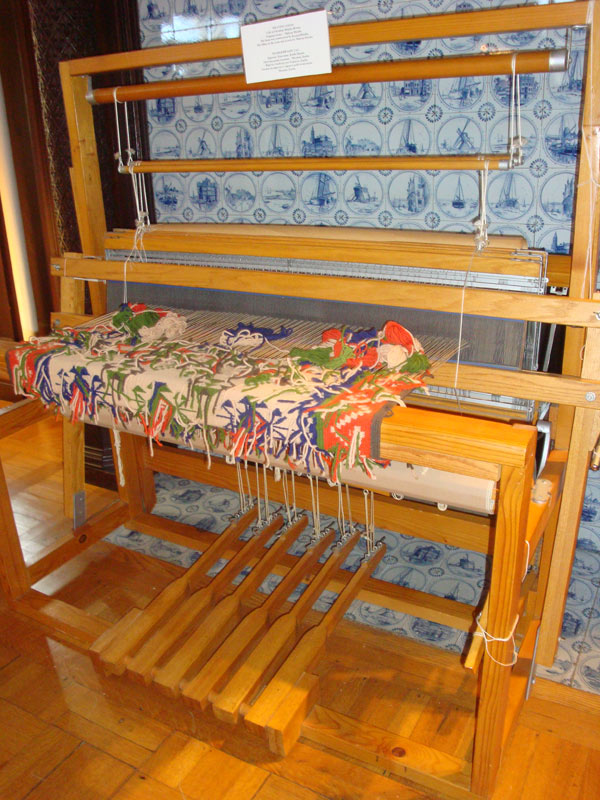
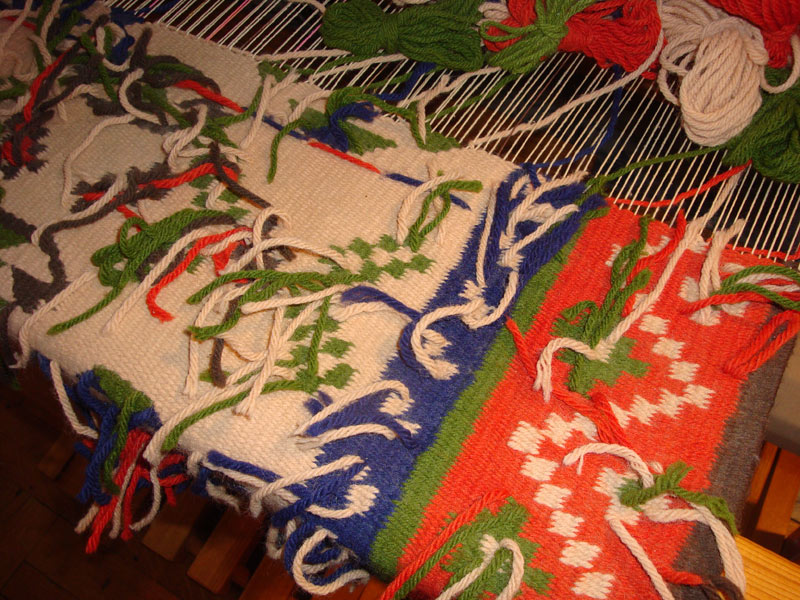
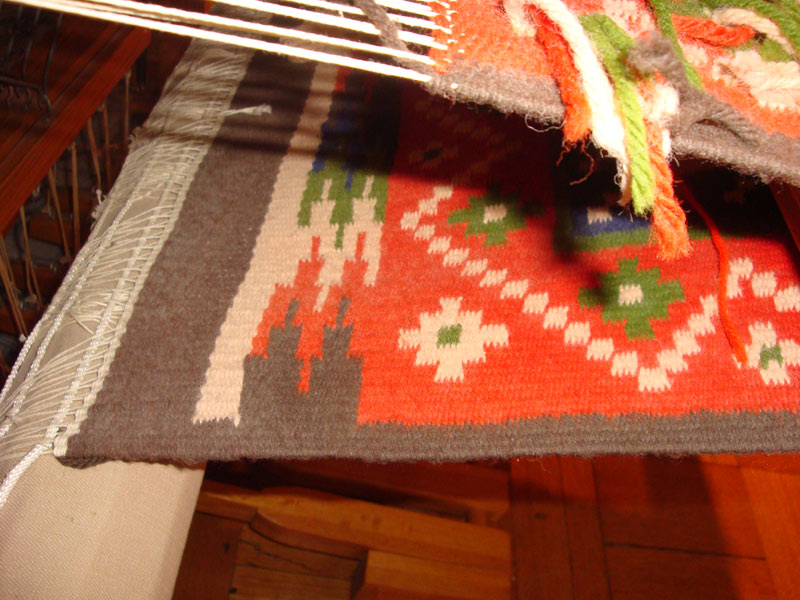
Malyna Stawnycha Dziuba was born in the town of Yavoriv, western Ukraine. Her parents were High School teachers. She completed her High School and Community College education in the city of Stryj, western Ukraine and then went on to the University of Poznan majoring in agricultural studies. In 1941 fleeing from the Soviet occupation Malyna lived in Vienna and attended Medical School. At the end of the war Malyna and her family lived in Bavaria, Germany and in 1949 emigrated to the United States and settled in Buffalo, NY. All her life she was active in the Ukrainian community, in her parish church. She was a member of Plast and performed various duties as counselor, camp director etc. From early age Malyna was always interested in Ukrainian folk art and tried to master its various aspects and techniques. As a teenager, while spending summers in the Carpathian mountains, she watched village girls weave kilims and other textiles. This fascinated her and she learned to weave from them. Many years passed and after settling in Buffalo into a comfortable and stabilized way of life she yearned to revive her weaving skills. Not having a weaving loom, her husband Kornel built her a large six harness loom and once again she began to weave. Most of her weavings were of kilims reproducing old motifs and patterns. She wove quite a few kilims which her daughters and granddaughters treasure and enjoy. Malyna’s wish was that the loom be donated to our Museum. With it came an extensive supply of weaving materials and accessories. Both Malyna and her husband Kornel were avid readers and collectors of books. Kornel and Malyna’s library of Ukrainian publications was also donated by their daughters to our Museum and Library (17 boxes) as well as additional folk art items, parts of Ukrainian folk costumes, and textiles. These gifts truly enriched our Museum and Library holdings and will be preserved by us for posterity and used in exhibitions. Our visitors then will be able to enjoy and appreciate the beauty and wealth of our culture. КНИГОЗБІРНЯ ДР. ЯРОСЛАВА ҐЕЛЕТИ У СТЕМФРОДІ Український Музей та Бібліотека в Стемфорді - найстарші українські культурні інституції в США, які були засновані в 1937 році. Десятки років ці установи служили українській діяспорі. А з часів незалежності України радо відкрили двері українським дослідникам та вченим. Бібліотечний книжковий фонд нараховує більше 70,000 примірників українських книг та періодичних видань, які каталоговані та описані в сучасній світовій біліотечній системі і є включені у світовий каталог. Фонди бібліотеки періодично поповнюються новими надходженнями книг та періодики з України та україномовних еміграційних видань. На даний час впорядковано значну частину цінного архівного матеріялу, який класифікований за тематикою, а також впорядковуються особисті архіви визначних українців діяспори, таких як Єпископ Сотер Ортинський, Єпископ Константин Богачевський, Єпископ Амврозій Сенишин, Єпископ Василь Лостен. Також уже впорядковано архів Ярослава Падоха, Юрія Старосольського, Уляни Старосольської, Миколи Угрина-Безгрішного, Миколи Чубатого, архів Комітету Допомоги Скитальцям – діячам Української Культури, архів Українського Католицького Допомогового Комітету, та інших. Неоціненним скарбом архіву є оригінальні документи рукописних та друкованих матеріялів з власноручними підписами та печатками. Ці документи засвідчують про життя та діяльність українців у США у різні історичні періоди часу та висвітлюють невід’ємну роль Греко-Католицької Церкви у житті української діяспори. За останні роки бібліотеці подаровано багато цінних особистих книгозбірень, архівів, авторських досліджень, копій друкованих писемних пам’яток, праць різних авторів, а також Бібліографічних відомостей про відомих людей в Україні та діяспорі. Серед цієї великої друкованої спадщини українців у США є книгозбірня і архів бл.п. д-ра Ярослава Ґелети (1918-2005), яку подарувала Бібліотеці вдова Пані Богданна Ґелета. Ця надзвичайно добірна книгозбірня нараховувала близько 700 книг та періодичних видань, та архівних матеріялів. Др. Ярослав Ґелета народився 17 грудня 1918 р. у селі Іспас, що біля Коломиї в родині учителів. У 1937 р. склав іспит зріслості в Коломийській українській класичній Ґіманзії. Восени 1939 р. став слухачем студій вертеринарної медецини у Львівському Ветеринарному Інституті (1939-1944). Подальше навчання продовжував у Німеччині - б Лейпціґзькому університеті - на Факультеті Ветеринарної Медецини. І вже навесні 1945 р.одержав диплом лікаря ветеринарної медицини. Після війни продовжував навчання у Високій Ветеринарній Школі у Ганновері, де 1946 р. одержав науковий ступінь доктора ветеринарної медицини. Працював на сільско-господарській експереминтальній стації Університету Делавер. З 1961 року працював в Белтсвил, Мериленд - при Міністерстві сільського-господарства –на дослідній станиції. Відділу тваринних захворювань і паразитів. Після цього перейшов пацювати в Адміністрацію Харчів і Ліків. Що Міністерстві Здоров’я, Виховання і Добродійности у Вашинґтоні, ДК. А восени 1962 р. поїхав працювати у дослідній лабораторії в Бюро Ветеринарної медицини в Белтсвиллі, Мериленд. За свою плідну дослідницьку працю був відзначений грамотою Адміністрації Харчів і Ліків Міністерства охорони здоров’я США. Рівнож був відзанчений почесною грамотою Уряду України за внесок у зміцненні зв’язків між Україною і Сполученими Штатами Америки і грамотою - подякою за внесок иу зміцненні міжнародних зв’язків Львівської академії ветеринарної медицини та надання допомоги в розвитку ветеринарної науки. Майже все свідоме життя Ярослава Ґелети було тісно пов’язане з українськими науковими, культурними установами та організаціями в діяспорі. Він був у числі тих українців, які докладали всіх зусиль, щоб не допустити до нівеляції українськості в підневільній Україні, а в роки незалежності відвідував та співпрацював з українськими науковими установами, сприяв їх відновленню та розвитку. Я. Ґелета цікавився життям та діяльністю українців і за період 199302001 років зібрав велику колекцію газетно-журнальних статтей за період 1993-2001 р., в яких висвітлено перебіг політичного, освітнього та культурного життя в Україні. Через це не може бути найменшого сумніву, що незабаром буде написано велику книгу про працю і долю української інтелігенції взагалі й, зокрема, у діяспорі. Почесне місце в ній займуть предстаники української суспільно-громадської та наукової думки і серед них буде ім’я д-ра Ярослава Ґелети. Управа та Адміністрація Українського Музею і Бібліотеки в Стемфорді глибоко вдячна вдові бл. п. Ярослава Ґелети – Пані Богданні Ґелеті за її рішення передати для збереження та вжитку таку багату, повну рідкісних та унікальних видань книгозбірню нашій установі. Ця книгозбірня не лише дповнила, але значно збагатила наші біліотечні фонди та архівну збірку. Нашою бібліотекою та архівами постійно користуються науковці України та Америки. Ціль нашої установи - не лише збереження, але й намагання зробити доступними бібліотечні фонди та архіви для науковців, дослідників та усіх зацікавлених. І це ми успішно виконуємо. Зацікавленим нашою установою рекомендуємо переглянути нашу WEB сторінку www.ukrainianmuseumlibrary.org Адміністрація та Дирекція УкраїнськогоМузею та Бібліотеки в Стемфорді.
Ursula and Ostap Balaban Gifts to the Ukrainian Museum and Library of Stamford Ostap (1918-2002), a leading community activist and philanthropist
together with his wife Ursula (1923-2006) for many years have been
avid art collectors and have accumulated a very extensive collection
of both Ukrainian and non-Ukrainian art works. In the Balaban Living
Trust they have provided selected Ukrainian cultural institutions
to be the recipients of certain artwork from their collection amongst
which was our Ukrainian Museum and Library of Stamford. - 30 icons and religious paintings ranging
from 18th to 20th centuries; We are honored and proud to be the recipients of
such unique and valuable art works which have enormously enriched
our museum’s collection.
Other Gifts:
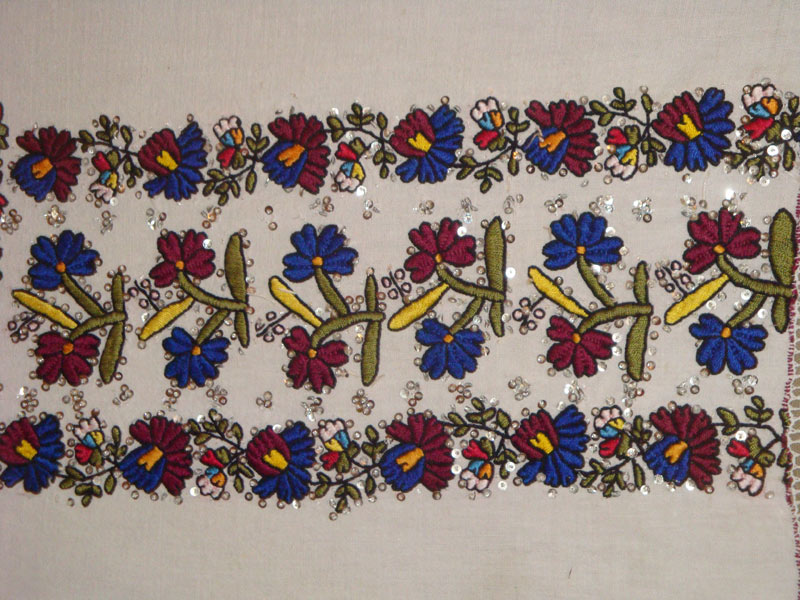
Plates 1-8 have floral embroidery designs from the Boiko region.
Lev Rejnarowycz (1914-1987) was an opera singer (baritone).He was a graduate of the Lysenko Higher Institute of Music in Lviv and from 1941 he was a soloist at the Lviv Opera House. From 1946 he was a member of B. Piurko’s Ukrainian Opera Ensemble in Germany. In 1949 he immigrated to Unites States and appeared on stage in various cities and on television. He was active member of the Ukrainian community in New York in organizing concerts and opera productions.  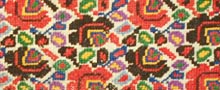
|