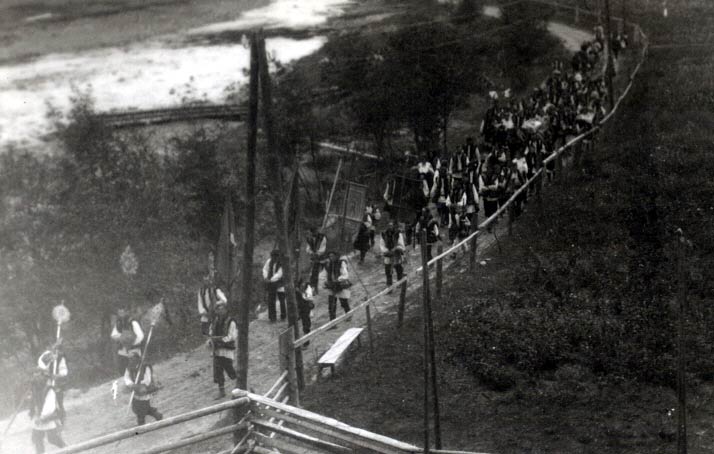
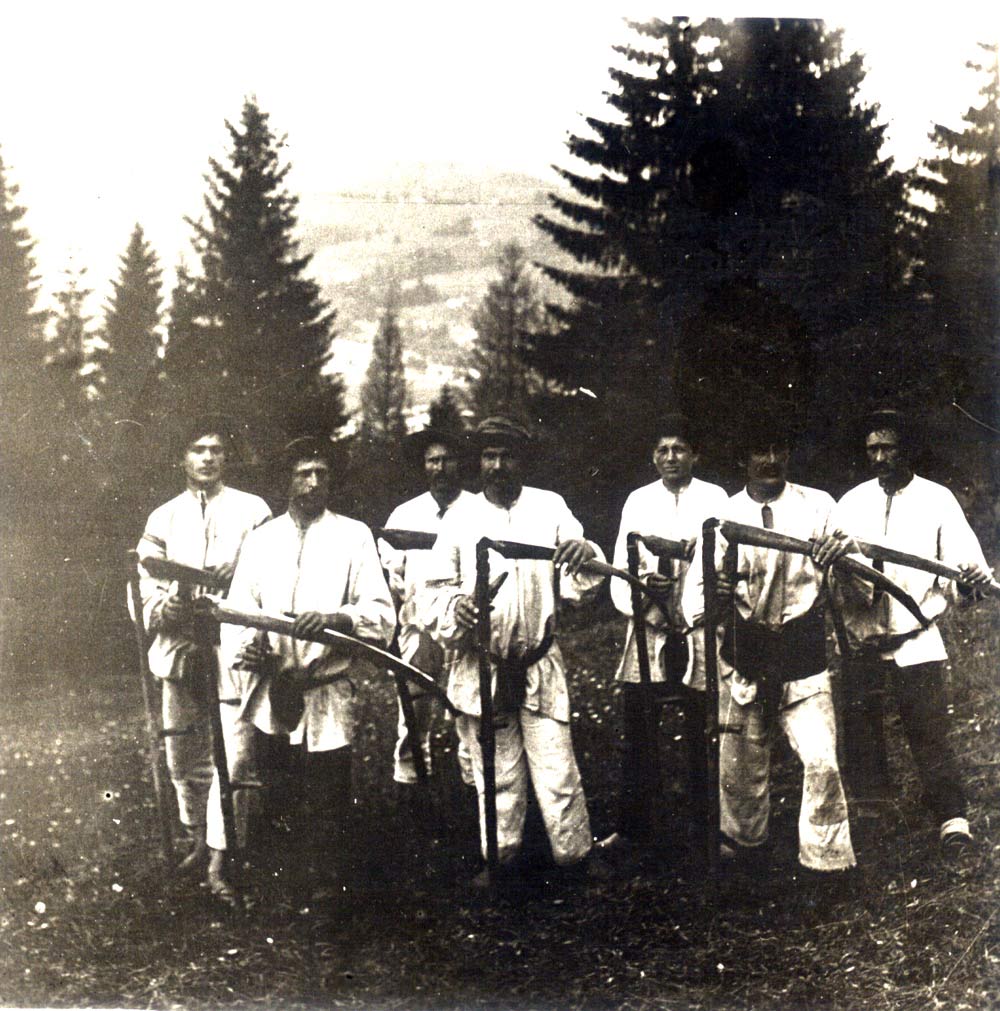
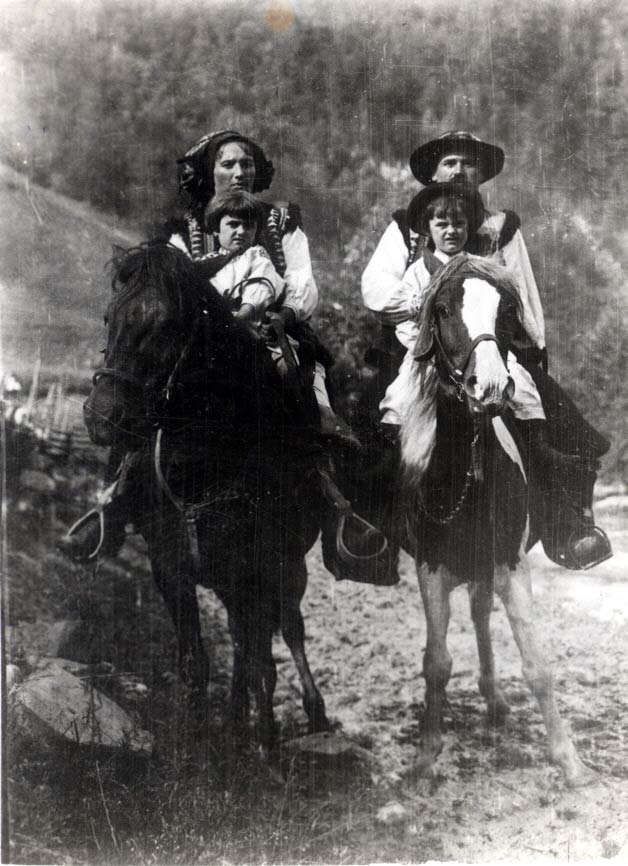
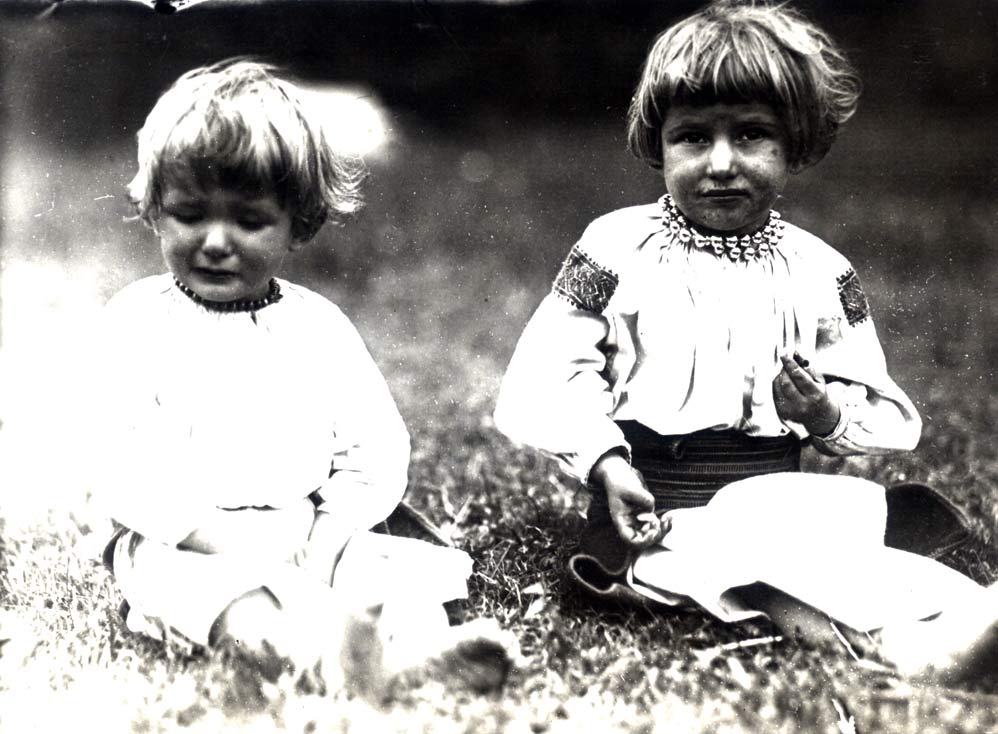
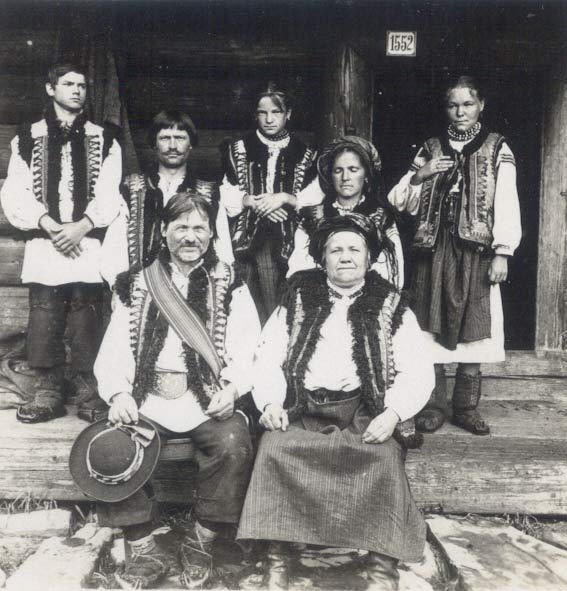
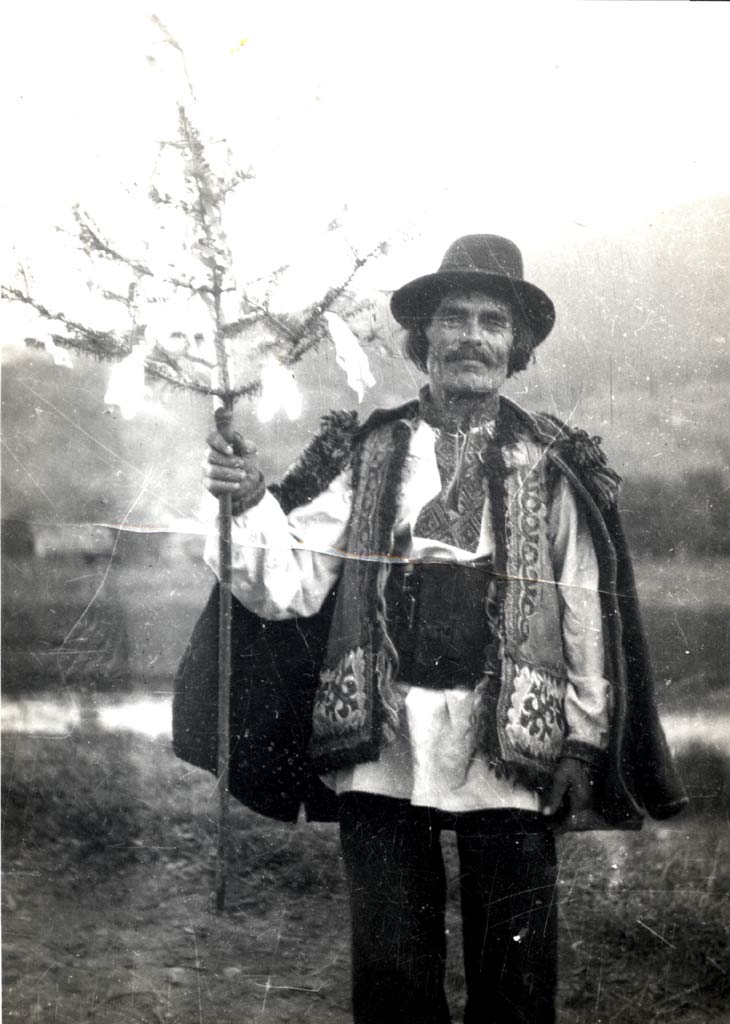
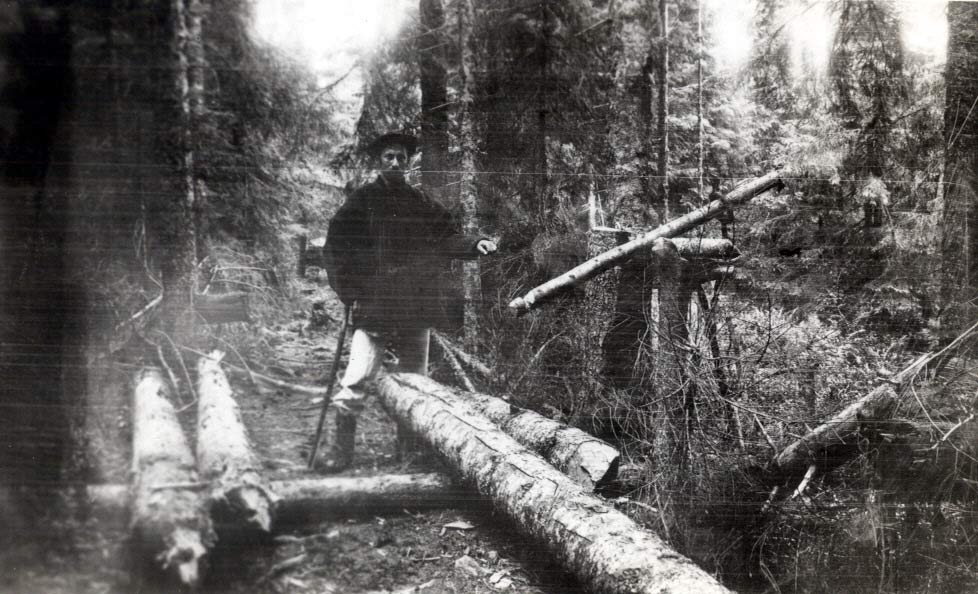
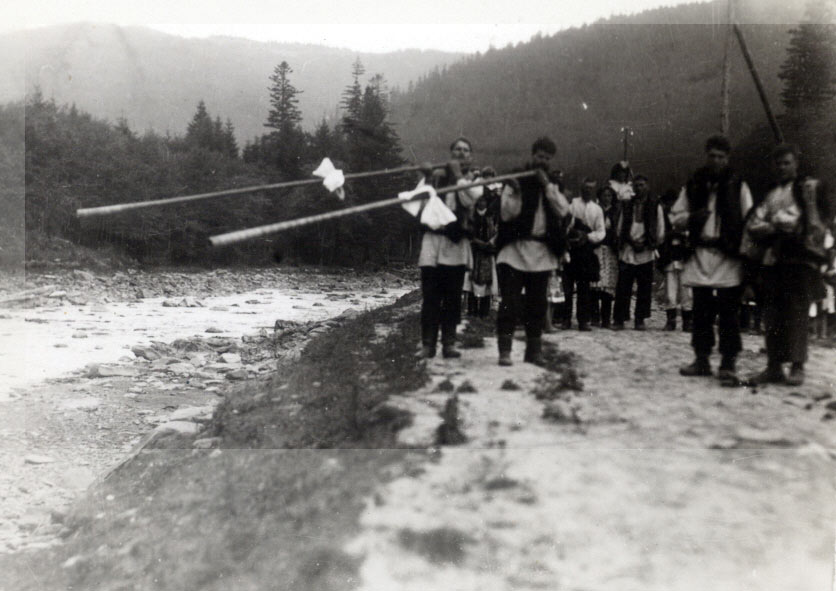
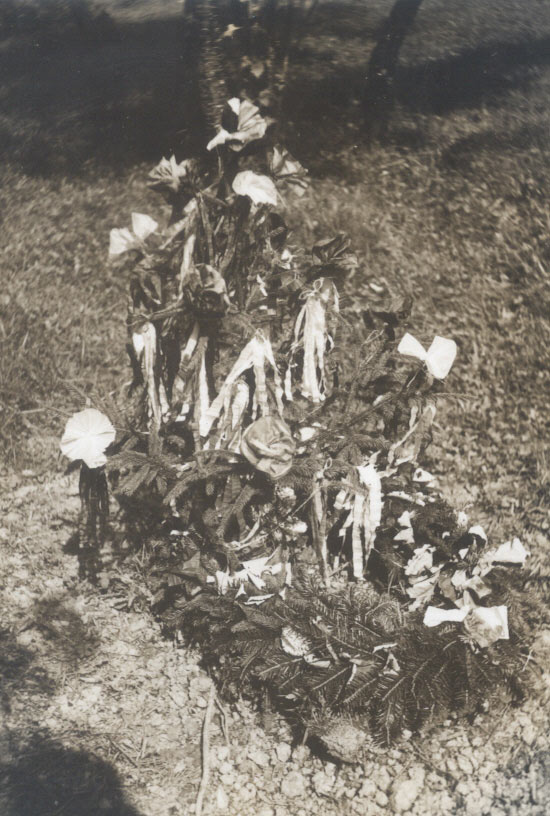
The Library collection has in its holdings three albums of original photographs depicting the Carpathian Mountains and its inhabitants- the Hutsuls. The photographs were taken by Henryk Gasiorowski (1878-1947) in the 1920-30s. He was a Major in the Polish Army, a geographer and an author of one of the best tourist guide books to the Carpathian mountains and its environs, which was published in L’viv in 1933. He considered the Hutsul region to be on of the most beautiful corners of the Carpathians and the Hutsuls to be the most fascinating ethnographic group of people not only in the Halychyna area but in the whole of Europe. The albums are divided into three major subjects: Album 1 – View
of the mountains and its nature. 9 photographs from the album are displayed to your right.
Items of the month from the museum collections:
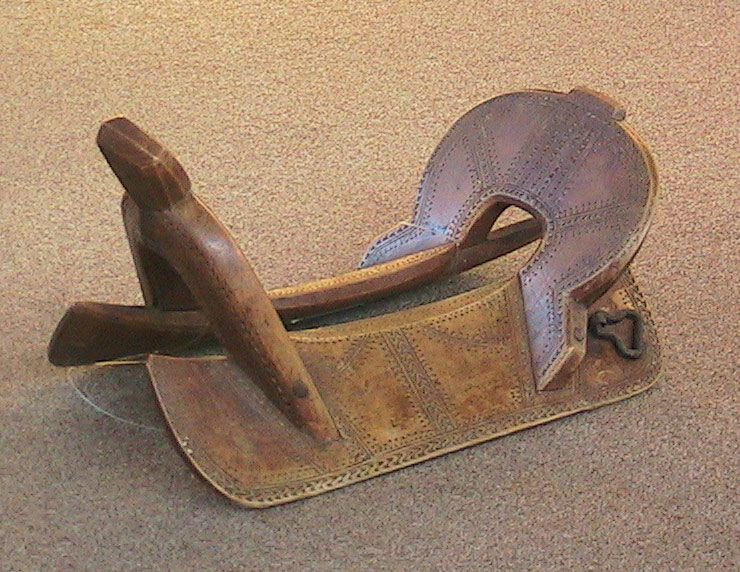
Decorated with carved
design.
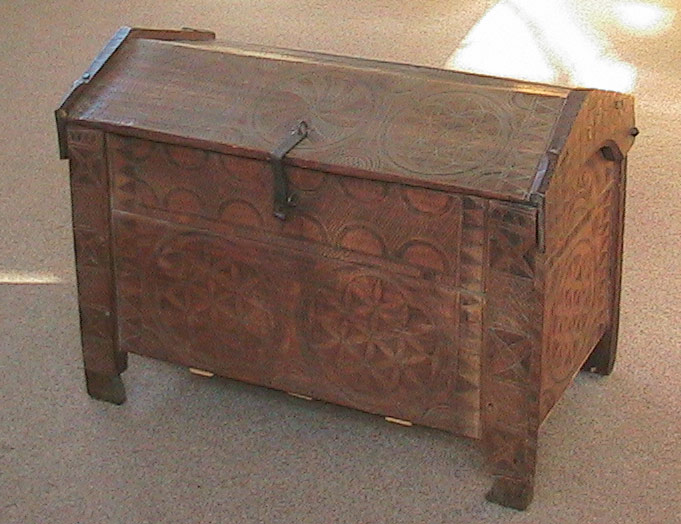
Decorated with carved designs, mostly sun motifs. Every young maiden had to have a dowry chest which usually was given to her by her God-father. From early age the young girl filled the chest with embroidered shirts, bolts of linen cloth she herself wove, various woven textiles, items of adornment like coral necklaces, metal crosses, necklaces out of silver coins, etc. At the time of her marriage the dowry chest should have been filled to the brim and went with her to her husband's home.
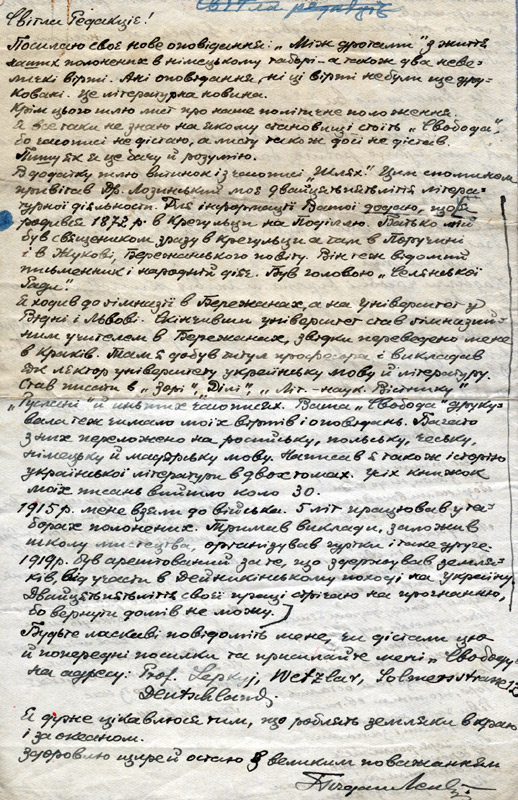
Items of the month from the archival collection:Manuscript. Bohdan Lepky's short story "Za Drotamy" (Behind Barbed Wire), and two poems "V Svit Pishly My..." (Into the World We Went) and "Ne Kydai Pluha Sered Nyvy" (Do Not Leave the Plough in the Middle of the Field), hand written and sent to the editors of Svoboda, the Ukrainian Daily in the United States in 1920. The poet at that time lived in Berlin.
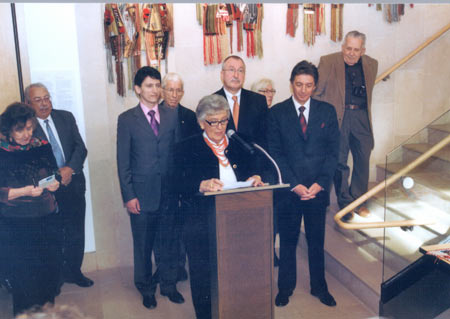
 NEWS OF INTEREST - PAST AND PRESENTOn January 25, 2008 organizers and creators of the Rushnyk (Ritual cloth) of National Unity came to the Ukrainian Museum in New York City. The cloth symbolizes the unity of the Ukrainian people around the world. The Rushnyk already was embroidered by over 1,000 Ukrainians. All present at this event in the New York Museum were able to add a few embroidery stitches to the Rushnyk and thus symbolically participate in this act of unity of all Ukrainians wherever they might be. Lubow Wolynetz, curator of our museum was present at this event and delivered a talk about the important role the Rushnyk occupies in Ukrainian traditions.
In March of 2008, our Museum and Lubow Wolynetz were featured on Martha Stewart’s Blog. Photgraphers were sent to the Museum to take photos of PASKA the Ukrainian Easter bread for Martha’s upcoming book on elegant entertaining. In addition the PASKA, they also photographed various rooms in the museum and the displays of Ukrainian Folk Art.
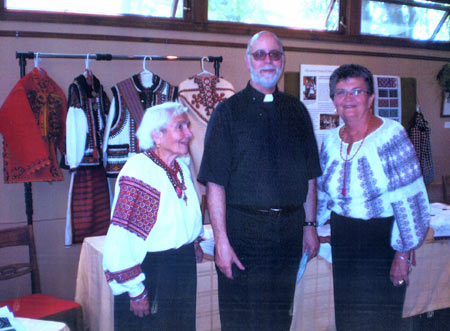
To view the blog about PASKA and read many interesting comments go to: http://blogs1.marthastewart.com and search by the subject PASKA or go to the archives. March 8-9, 2008 a “Pysanka Symposium 2008” organized by Jurij and Olenka Dobczansky took place in Washington, DC at the Ukrainian Catholic National Shrine of the Holy Family. Lubow Wolynetz was one of the panel speakers. Her topic was “Pysanky: Collecting and Exhibiting”. A conference of the New Fourth Wave was held in March 7, 2009 in Stamford using the facilities of the Museum. In connection with the conference, the Museum presented a two day exhibition of the works of Yuriy Kostiv – a woodcarving artist. In March 20, 21, & 22, 2009 an exhibition of Ukrainian embroidery and a seminar entitled “Ukrainian Embroidery - Metamorphosis of Function and Beauty “ was held at the Ukrainian Cultural Center, Jenkintown, Pa. It was organized jointly by Branch 88 of UNWLA and Ukrainian Heritage Studies Center of Manor College. Lubow Wolynetz April 30th participated in the Seminar and spoke on the topic of “ Embroidered Ritual Cloths”. The curator of the Museum, Lubow Wolynetz attended the American Association of Museums Conference in Philadelphia, Pa. which was held April 30 to May 4. June 7, 2009 a “Kalyna Fest” was held on the grounds of St. Basil College Campus. It was organized by the All-American Organization – “Fourth New Wave”. The Ukrainian Museum and Library participated in this event by organizing a hands-on workshops of Ukrainian arts and crafts. The artisans that participated were as follows: Evdokia Sorokhaniuk (weaver and embroiderer), Maria Panczak (Weaver and embroiderer), Bohdanna Puzyk (pysanka artist), Anna Boychuk (weaver), Yuriy Kostiv (woodcarver) and Lubow Wolynetz. (ritual bread baker)..The June 7, 2009 issue of the Stamford Advocate featured an article written by Scott Gargan about the Museum and the festival under the heading “A Haven for Heritage – Ukrainian Museum Celebrates Future as it Cherishes the Past”.
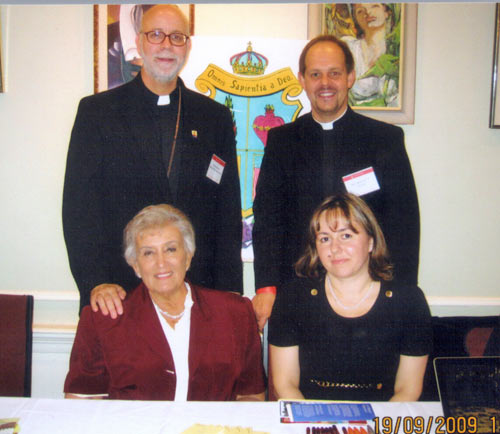
The Ukrainian Museum and Library and St. Basil College participated in the annual “Welcome to Ukrainian New York” organization fair and reception which was held September 19, 2009 and sponsored by the Ukrainian Institute of America. Brochures and catalogues were distributed to familiarize visitors about our cultural institutions
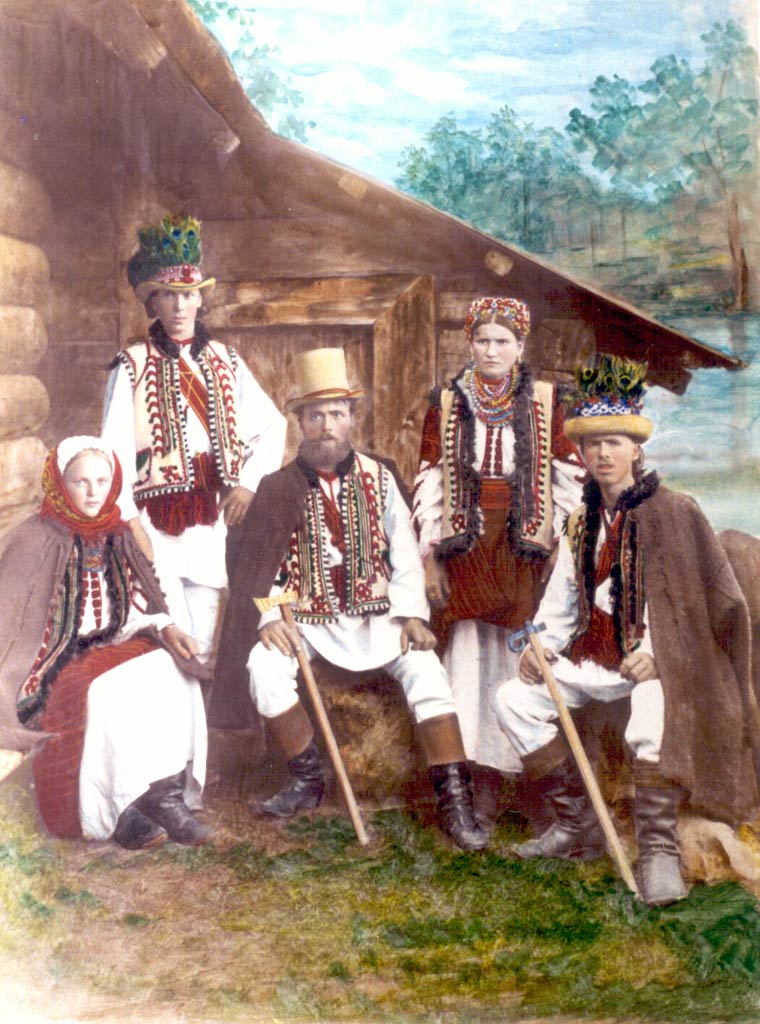
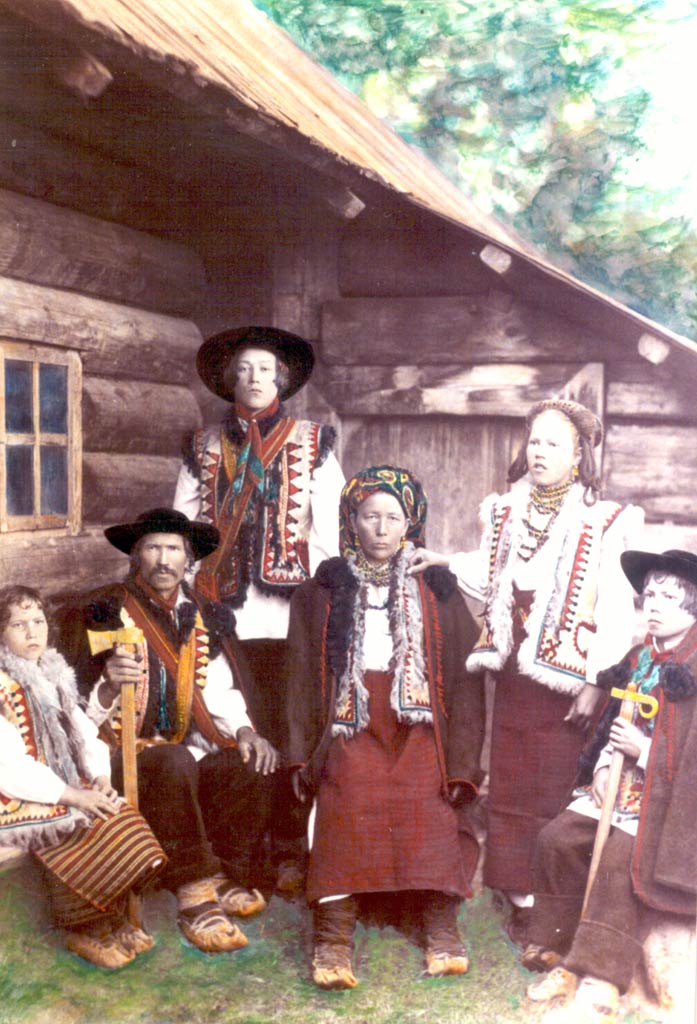
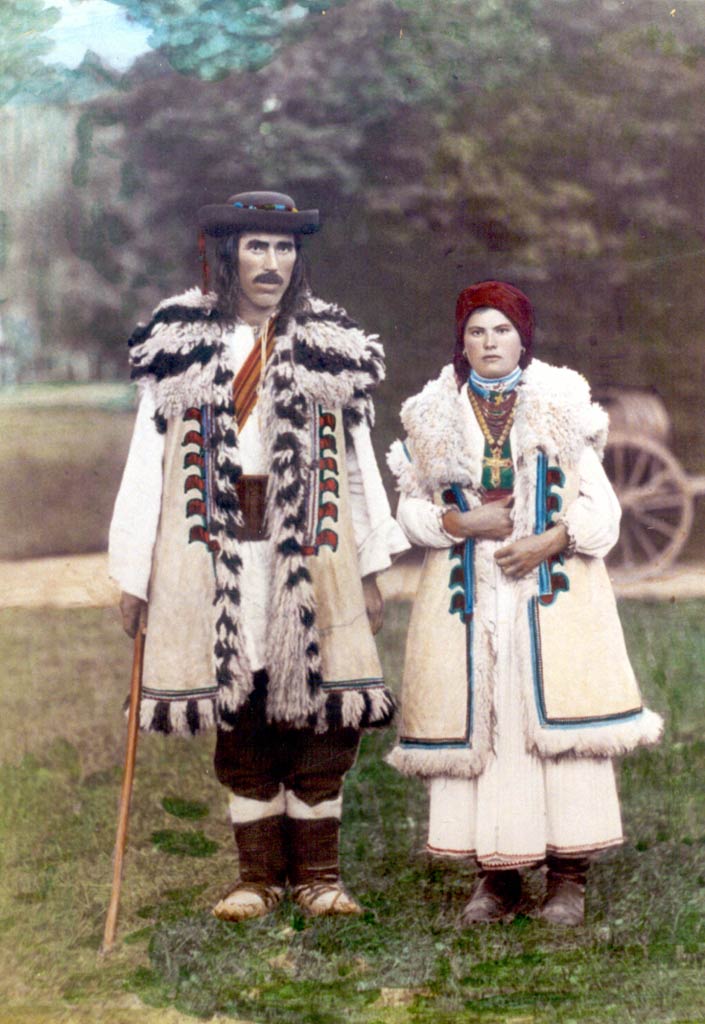
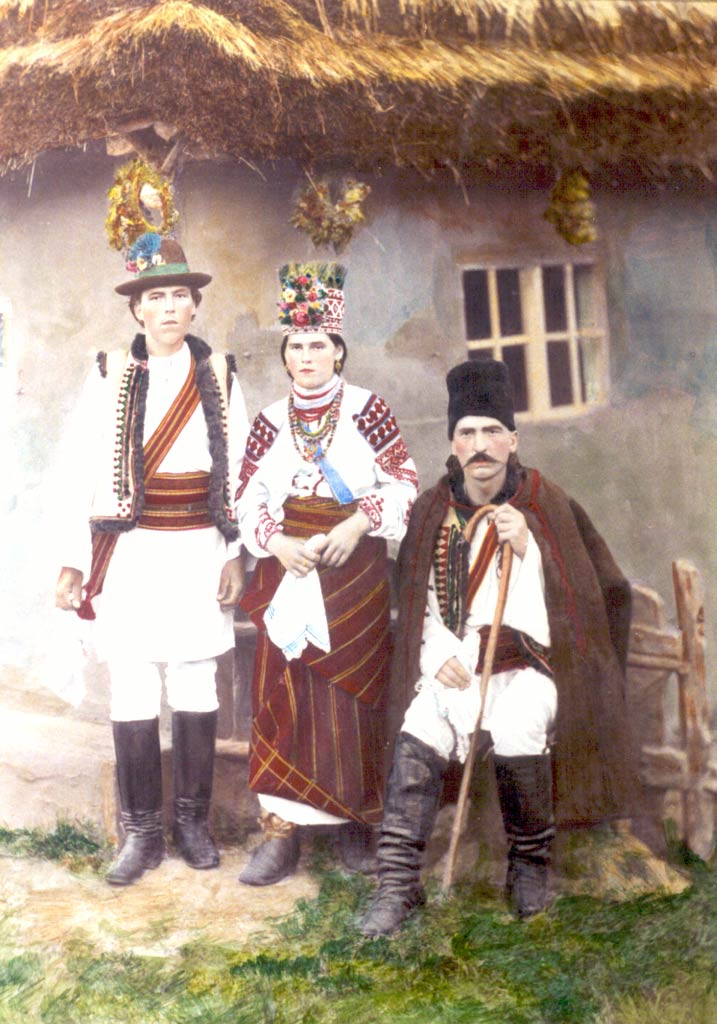
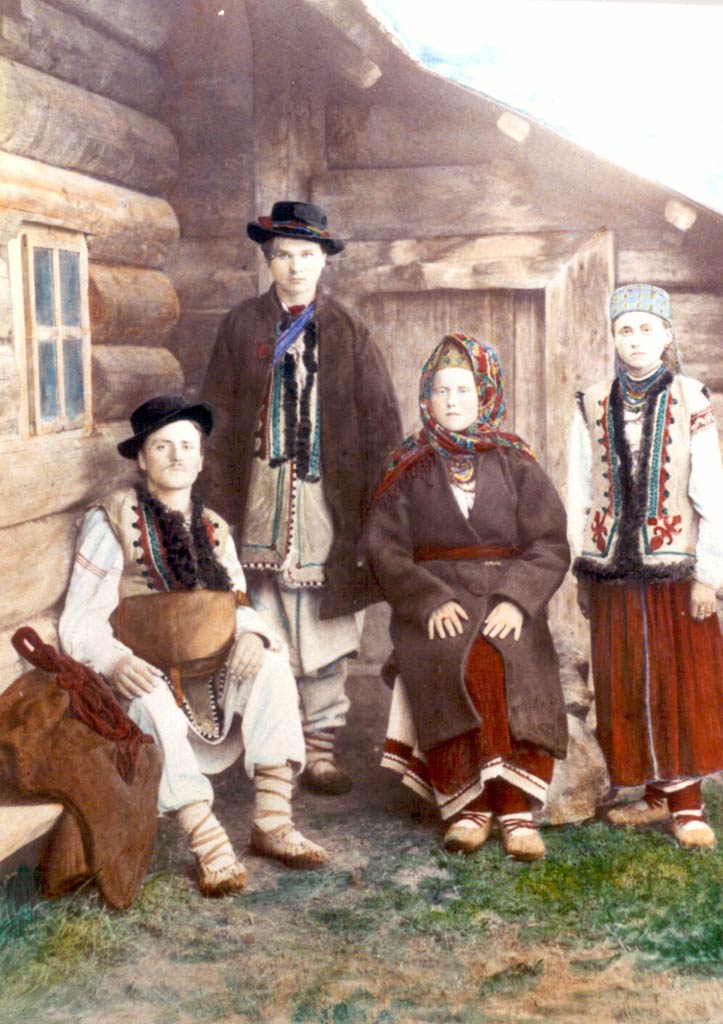
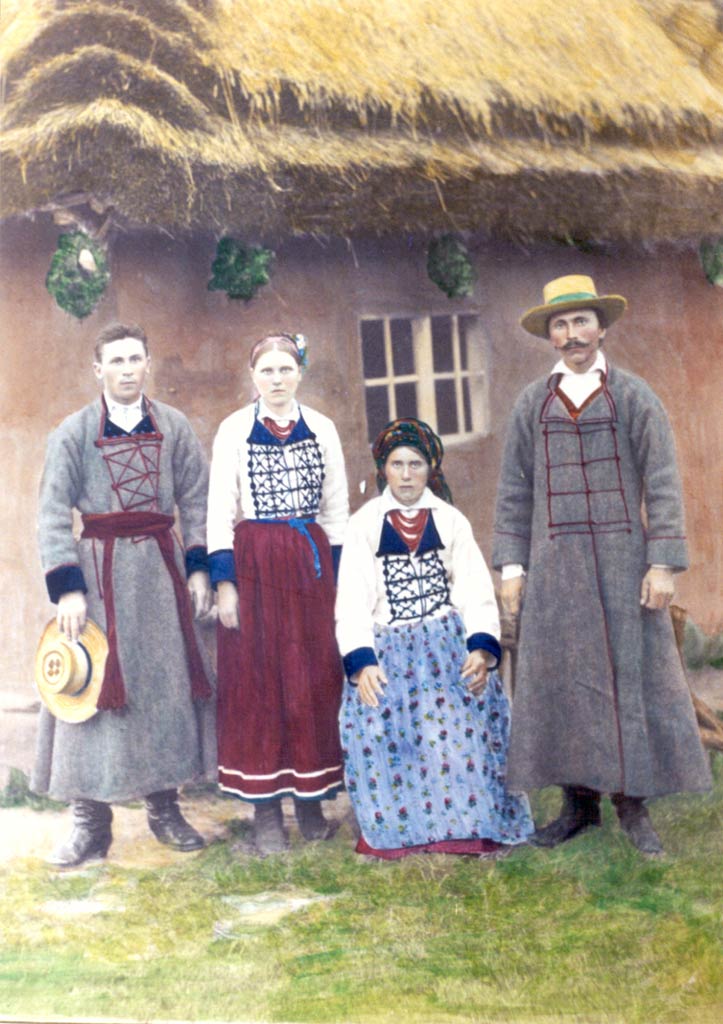
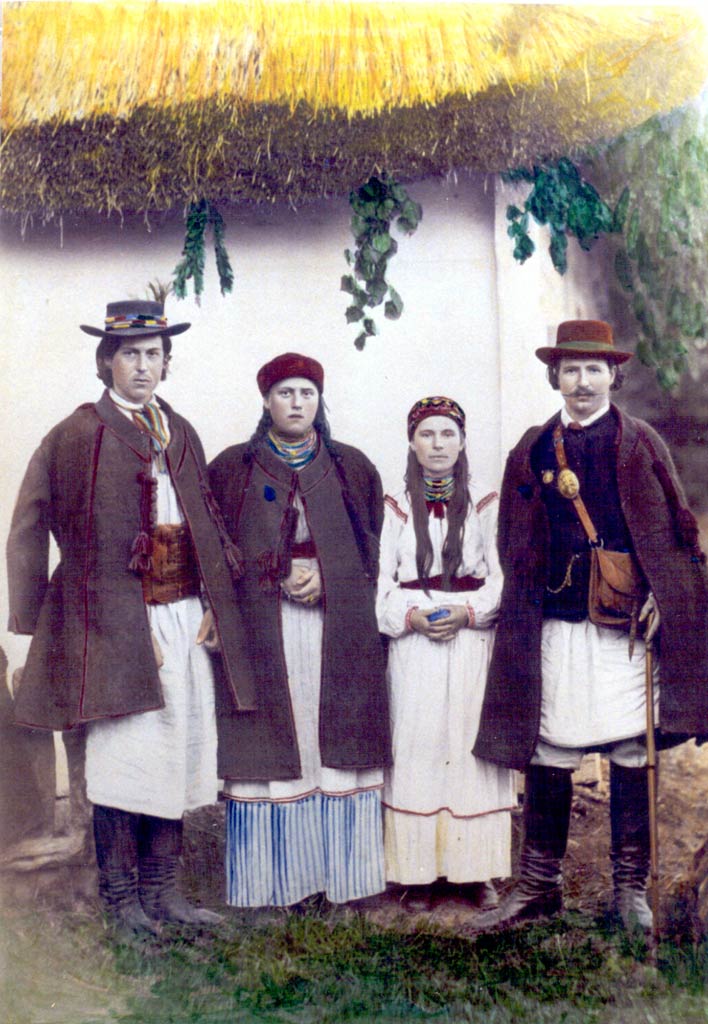
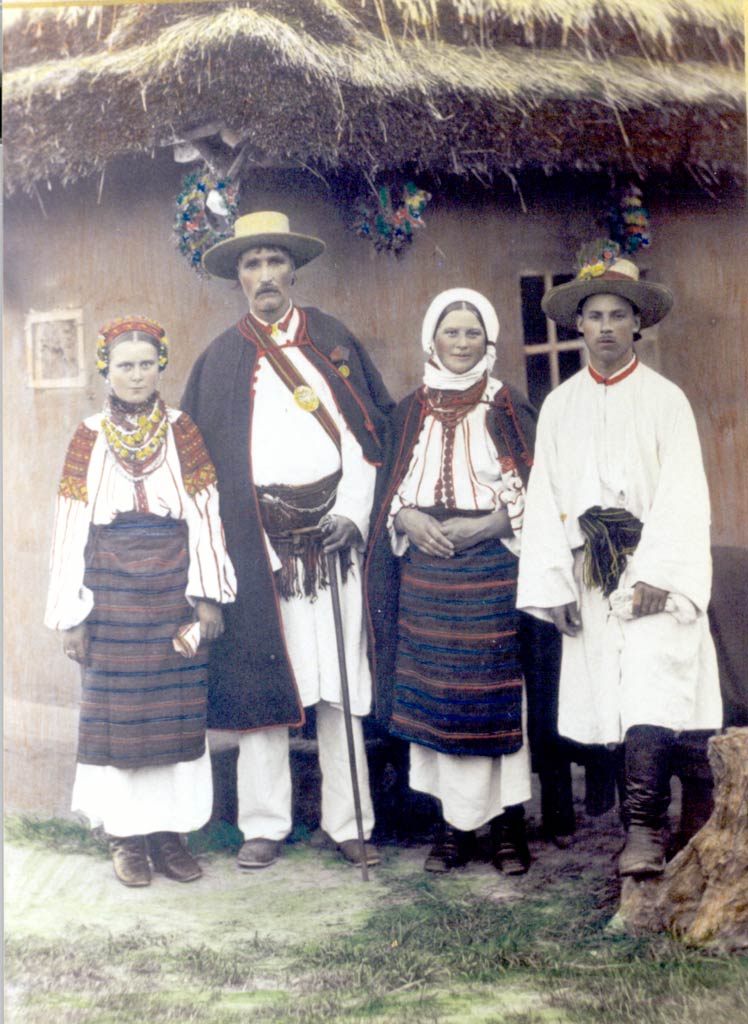
UKRAINIAN FOLK COSTUMESA series of photographs depicting groups of people dressed in their regional folk costumes keep reappearing in many of the publications dealing with Ukrainian folk garb and folk art. Although these groups of people are set against the background of a village home (clay house with a thatched roof or a log house), orchard or field, they, nevertheless, have the look of being staged and posed for a special occasion or for a specific purpose. This is the story behind these photographs. Emperor Franz Joseph visited Halychyna in 1886. The following year, 1887, it was announced that Crown Prince Rudolf was to visit Halychyna and Bukovyna, with stops in L’viv and Ternopil’ in order to better become acquainted with the country and its people. The Ternopil’ city district council organized a committee which was to plan a program and reception for Crown Prince Rudolf. The committee consisted mostly of Polish aristocrats; from among Ukrainians they invited only Volodyslav Fedorovych, a rich landowner, and Oleksander Barvins’kyi who was delegated from the Ukrainian Public Council of Ternopil. At the first meeting, at the suggestion of the Ukrainian members, five more Ukrainians were co-opted. The committee decided to have an ethnographic exhibition in the pavilion in the city’s public garden. The exhibition was to show the lifestyle of the people – its folk dress, traditions, arts and crafts etc. As an additional illustration of the way of life of Ukrainian peasantry in Halychyna, four different homesteads were built in the park. They depicted homesteads from Podillia, Dnister River, Buh River, and Hutsul area styles. It was also decided to have, groups of peasants from 45 different districts, in their native dress. Also, a group of villagers (from the village of Ostriv and Berezovytsia Velyka) were to perform traditional harvest rituals, singing and dancing to the accompaniment of a folk orchestra. A cantata in honor of the Crown Prince was written by Professor N. Vakhnianyn and sung by a choir of over 100 folk singers assembled from various villages. The organization of the choir and choral practice was in the hands of the Reverends Iosyf Vitoshynskyi and Amvrozii Krushelnytskyi (father of Solomiia Krushelnytska). A photographer from Ternopil by the name of Sylkevych photographed all of the groups in costumes, hand-colored them and prepared two albums. One album of photographs in a box carved by Vasyl Shkribliak was given to the Crown Prince and the second album was purchased by “Prosvita” Society of Lviv. This information comes from a book by Oleksander Barvinskyi entitled “Spomyny z moho zhyttia” (Memoirs of My Life). Lviv: 1912 which I read quite a few years ago when I worked in the Slavonic Division of the New York Public Library. These memoirs have been reprinted recently in Ukraine. Every time I went to Ukraine I kept asking my museum acquaintances whether they knew anything about these photographs and whether they were available or lost. Finally during one such inquiry, a librarian from the Ethnographic Museum of Lviv said I think we might have some of them, and so they did. Here are a few reproductions. (L.W.) 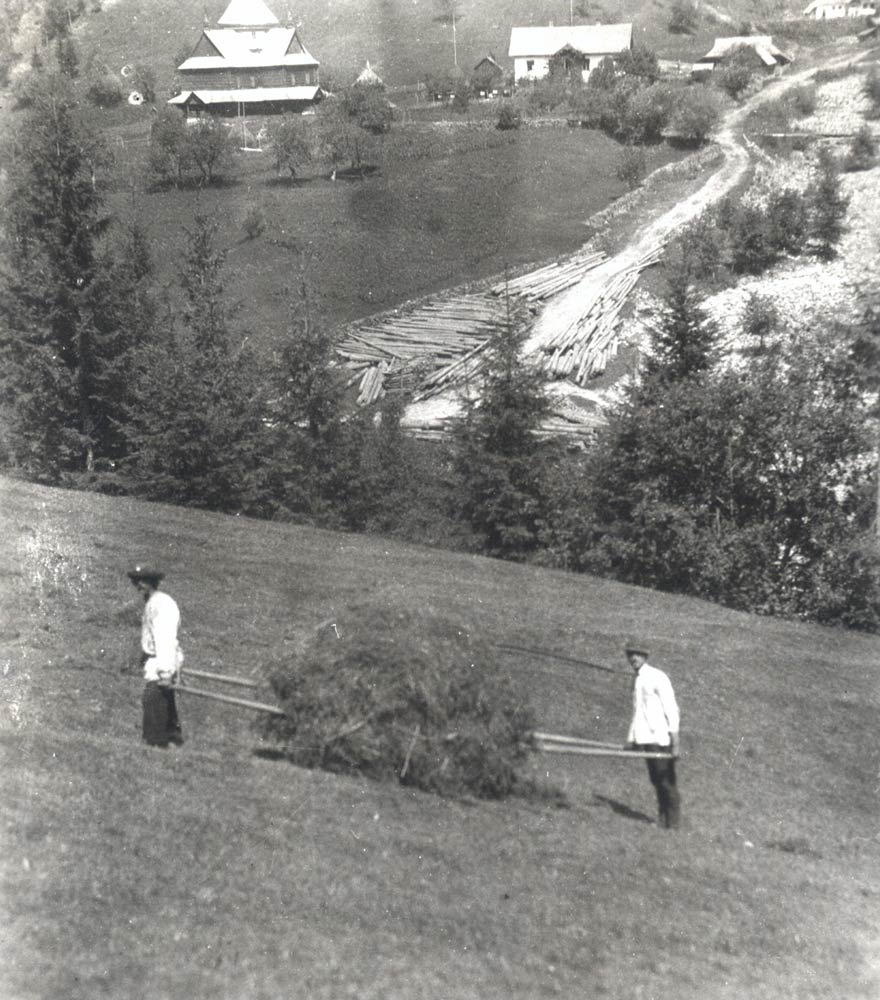 Carrying Hay in Carpathian
|